Project 11

  • Project Topic Subtitle: Thermal switching and operation of hybrid DNA-origami plasmonic structures and nanopores
  • Selected Outputs / References:

    Solid-state and DNA-origami hybrid nanopores. Before the start of the DYNAMO project, nanopore technologies and DNA nanotechnology had already demonstrated strong potential for single-molecule sensing and sequencing applications[cite: 3]. Solid-state nanopores were widely investigated because of their stability, tunable geometry, and compatibility with electrical detection techniques[cite: 3]. At the same time, DNA origami emerged as a powerful platform for constructing programmable nanoscale architectures with controllable geometries and functionalities[cite: 3]. Early studies demonstrated that DNA-origami nanopores could be integrated with solid-state membranes to create hybrid systems with improved selectivity and controllable molecular transport[cite: 3]. Bell et al. (2012) first showed that DNA-origami structures could be docked into and ejected from solid-state nanopores under applied voltage, enabling the resistive-pulse detection of λ-DNA through hybrid pores[cite: 3]. Subsequent work extended the concept to graphene membranes and to programmable DNA nanoswitches read out by ionic current[cite: 3]. However, recurring limitations were reported, including residual leakage currents through the DNA scaffold, elevated and variable ionic noise compared with bare solid-state pores, and only partial control over the orientation and stability of the inserted origami[cite: 3].

    Electroosmotic flow in nanopores and nanocapillaries. Electroosmotic flow (EOF) had also already been identified as an important mechanism governing transport inside nanopores and nanocapillaries[cite: 3]. Previous studies showed that EOF could influence translocation dynamics, trapping efficiency, and ionic transport near charged surfaces[cite: 3]. Asandei et al. (2016) demonstrated that EOF could be used as an electroosmotic trap against the electrophoretic force to capture peptides at a protein nanopore[cite: 3], and similar trapping concepts were extended to whole proteins inside engineered biological pores[cite: 3]. In glass nanocapillaries, Laohakunakorn and Keyser established that EOF profiles depend strongly on pore geometry and ionic strength, with flow reversal observed outside conical pores when the salt concentration is lowered[cite: 3]. However, most experimental investigations were performed under relatively limited conditions, often focusing on a single salt type (typically KCl), narrow concentration ranges, or comparatively large capillary geometries with limited spatial resolution of the flow field[cite: 3]. As a result, the detailed dependence of EOF on ion identity, concentration, and nanoscale confinement remained insufficiently understood, and three-dimensional mapping of the flow field outside a nanopore had only just been demonstrated as a proof of concept[cite: 3].

    Thermally responsive DNA nanostructures and hybridization physics. Thermally responsive DNA nanostructures and reversible DNA melting had already demonstrated the possibility of controllable structural switching at the nanoscale[cite: 3]. DNA origami nanocapsules and lattices reconfigurable by pH, temperature, or strand displacement had been reported, often relying on toehold-mediated strand exchange or triplex-forming pH latches[cite: 3]. Nevertheless, most earlier studies primarily focused on proof-of-concept demonstrations of structural reconfiguration, while the underlying physics of DNA hybridization remained only partially understood, especially under confined nanopore conditions and at the single-molecule level[cite: 3]. Theoretical and coarse-grained simulation work had outlined a picture of hybridization proceeding through non-specific contact, stochastic nucleation, and zipping[cite: 3], but direct experimental access to these elementary steps for short, surface-tethered strands embedded in nanofluidic environments was still largely missing[cite: 3].

    References
    1. Dekker, C. Solid-state nanopores. Nat. Nanotechnol. 2, 209–215 (2007).[cite: 3]
    2. Hernández-Ainsa, S. & Keyser, U. F. DNA-origami nanopores: developments, challenges and perspectives. Nanoscale 6, 14121–14132 (2014).[cite: 3]
    3. Rothemund, P. W. K. Folding DNA to create nanoscale shapes and patterns. Nature 440, 297–302 (2006).[cite: 3]
    4. Dietz, H., Douglas, S. M. & Shih, W. M. Folding DNA into twisted and curved nanoscale shapes. Science 325, 725–730 (2009).[cite: 3]
    5. Bell, N. A. W. et al. DNA origami nanopores. Nano Lett. 12, 512–517 (2012).[cite: 3]
    6. Barati Farimani, A. et al. DNA origami–graphene hybrid nanopore for DNA detection. ACS Appl. Mater. Interfaces 9, 92–100 (2017).[cite: 3]
    7. Bell, N. A. W. & Keyser, U. F. Specific protein detection using designed DNA carriers and nanopores. J. Am. Chem. Soc. 137, 2035–2041 (2015).[cite: 3]
    8. Firnkes, M. et al. Electrically facilitated translocations of proteins through silicon nitride nanopores: conjoint and competitive action of diffusion, electrophoresis, and electroosmosis. Nano Lett. 10, 2162–2167 (2010).[cite: 3]
    9. Laohakunakorn, N. et al. Electroosmotic flow reversal outside glass nanopores. Nano Lett. 15, 695–702 (2015).[cite: 3]
    10. Asandei, A. et al. Electroosmotic trap against the electrophoretic force near a protein nanopore reveals peptide dynamics during capture and translocation. ACS Appl. Mater. Interfaces 8, 13166–13179 (2016).[cite: 3]
    11. Schmid, S. et al. Nanopore electro-osmotic trap for the label-free study of single proteins and their conformations. Nat. Nanotechnol. 16, 1244–1250 (2021).[cite: 3]
    12. Mc Hugh, J., Andresen, K. & Keyser, U. F. Cation-dependent electroosmotic flow in glass nanopores. Appl. Phys. Lett. 115, 113702 (2019).[cite: 3]
    13. Mc Hugh, J., Thorneywork, A. L., Andresen, K. & Keyser, U. F. 3D flow field measurements outside nanopores. Rev. Sci. Instrum. 93, 053703 (2022).[cite: 3]
    14. Ijäs, H. et al. Reconfigurable DNA origami nanocapsule for pH-controlled encapsulation and display of cargo. ACS Nano 13, 5959–5967 (2019).[cite: 3]
    15. Kosuri, P., Altheimer, B. D., Dai, M., Yin, P. & Zhuang, X. Rotation tracking of genome-processing enzymes using DNA origami rotors. Nature 572, 136–140 (2019).[cite: 3]
    16. Marras, A. E., Zhou, L., Su, H.-J. & Castro, C. E. Programmable motion of DNA origami mechanisms. Proc. Natl. Acad. Sci. USA 112, 713–718 (2015).[cite: 3]
    17. Ouldridge, T. E. et al. DNA hybridization kinetics: zippering, internal displacement and sequence dependence. Nucleic Acids Res. 41, 8886–8895 (2013).[cite: 3]
    18. SantaLucia, J. & Hicks, D. The thermodynamics of DNA structural motifs. Annu. Rev. Biophys. Biomol. Struct. 33, 415–440 (2004).[cite: 3]
    19. Bhattacharya, S. et al. Changes in salt concentration modify the translocation of neutral molecules through a ΔCymA nanopore in a non-monotonic manner. ACS Nano 16, 9355–9366 (2022).[cite: 3]
    20. Brown, W. et al. Higher ion selectivity with lower energy usage promoted by electro-osmotic flow in the transport through conical nanopores. J. Phys. Chem. C 125, 3269–3276 (2021).[cite: 3]
    21. Teahan, J. et al. Scanning ion conductance microscopy: surface charge effects on electroosmotic flow delivery from a nanopipette. Anal. Chem. 93, 12281–12288 (2021).[cite: 3]
    22. Verpillat, F., Joud, F., Desbiolles, P. & Gross, M. Dark-field digital holographic microscopy for 3D-tracking of gold nanoparticles. Opt. Express 19, 26044–26055 (2011).[cite: 3]
    23. Hertel, S. et al. The stability and number of nucleating interactions determine DNA hybridization rates in the absence of secondary structure. Nucleic Acids Res. 50, 7829–7841 (2022).[cite: 3]
    24. Jungmann, R. et al. Multiplexed 3D cellular super-resolution imaging with DNA-PAINT and Exchange-PAINT. Nat. Methods 11, 313–318 (2014).[cite: 3]
    25. Yu, L. et al. Compliant DNA origami nanoactuators as size-selective nanopores. Adv. Mater. 36, 2405104 (2024).[cite: 3]
  • Hits: 56

Project 10

  • Project Topic Subtitle: Nanopore Readout Electronics: State of the Art Evolution
  • ESR Student Name: Ehsan Semsar Parapari
  • Selected Outputs / References:

    Ultra-low-noise ASIC-based electronics for nanopore sensing applications within the DYNAMO project

    Before the start of the DYNAMO project, nanopore sensing had already emerged as a powerful technology for single-molecule analysis and DNA characterization[cite: 2]. Both biological nanopores and solid-state nanopores were widely investigated for biosensing applications due to their capability to detect ionic current modulations produced by molecular translocation events through nanoscale pores[cite: 2]. Despite significant progress in nanopore fabrication and fluidic integration, the electronic readout systems remained one of the main limitations for high-performance sensing[cite: 2]. Nanopore measurements require extremely low-noise current sensing circuits capable of detecting picoampere and sub-picoampere current variations while maintaining sufficient bandwidth to resolve fast transient events[cite: 2].

    At that time, most nanopore readout platforms relied on discrete laboratory instrumentation or commercial patch-clamp amplifiers[cite: 2]. Although these systems provided good sensitivity, they were generally bulky, expensive, power-consuming, and difficult to scale toward large multi-channel arrays[cite: 2]. In addition, many existing CMOS integrated solutions suffered from limitations related to input-referred noise, bandwidth, stability, and dynamic range[cite: 2].

    A major challenge in CMOS current sensing was the implementation of ultra-high-value feedback elements in transimpedance amplifiers (TIAs)[cite: 2]. Conventional pseudo-resistors operating in the subthreshold region were commonly used to emulate very large resistances, but these structures often exhibited process variability, nonlinearity, thermal noise contribution, and bias sensitivity[cite: 2].

    Furthermore, the simultaneous handling of large DC baseline currents together with small transient nanopore events represented another critical limitation[cite: 2]. In many reported systems, the DC baseline current reduced the available dynamic range and degraded the sensitivity of the analog front-end[cite: 2]. Consequently, there was a strong need for compact, low-noise, high-bandwidth, and scalable ASIC-based nanopore readout systems capable of supporting future multi-channel sensing platforms and integrated biosensing technologies[cite: 2].

  • Hits: 3

Project 9

  • Project Topic Subtitle: Solid-State Nanopore Translocation and Biomolecular Readout
  • ESR Student Name: Simon Brauburger
  • Selected Outputs / References:

    Interpretation of topic: solid-state nanopore translocation and readout of biomolecules, with emphasis on nucleic-acid detection, transport control and the physical basis needed for electro-optical sensing.

    State of the art before DYNAMO

    General position of the field. Before the start of DYNAMO, solid-state nanopores were already established as a powerful platform for single-molecule biophysics and biomolecular sensing. In the basic experiment, a nanometre-scale pore separates two electrolyte reservoirs. A voltage drives ions through the pore and also drives charged biomolecules such as DNA or RNA through the sensing region. Each translocation produces a short change in ionic current, from which information about molecular size, conformation and transport dynamics can be extracted.

    Remaining limitation. However, the field had not yet solved the problem of reliable high-resolution molecular identification. Straightforward ionic-current readout is very sensitive to molecular velocity, signal-to-noise ratio, pore geometry and event-to-event variability. This is especially problematic for short DNA and RNA molecules, modified bases or single-base differences, because the available information must be collected during a very short residence time in the nanopore. A central challenge was therefore not only how to detect that a molecule had passed through a nanopore, but how to control and interpret the molecular motion well enough to identify chemical or structural features.

    Motivation for electro-optical approaches. Electro-optical nanopores, including approaches based on fluorescence, FRET, plasmonic enhancement and SERS, were proposed as routes to add molecular specificity beyond standard ionic-current detection. In principle, optical readout could provide chemical or structural fingerprints while the nanopore localises the molecule and provides electrical detection. Yet this strategy still depends critically on translocation dynamics: the molecule must remain in or near the sensing volume for long enough, with sufficiently reproducible orientation and position, for an interpretable optical or electrical signature to be recorded.

    State-of-the-art gap. Thus, at the start of DYNAMO, the field had strong proof-of-principle results for single-molecule nanopore detection, but lacked a complete mechanistic understanding of the transport process under realistic experimental conditions. Key unresolved questions included the roles of hydrodynamic drag, electro-osmotic flow, ion-specific effects, local molecular structure, labels, pore geometry and surface interactions. Addressing these questions was essential for translating nanopore detection into robust molecular readout.

  • Project Gallery:
    • Gallery Image: Review structure and link between operational parameters, physical mechanisms and performance metrics, Image Caption: Review structure and link between operational parameters, physical mechanisms and performance metrics
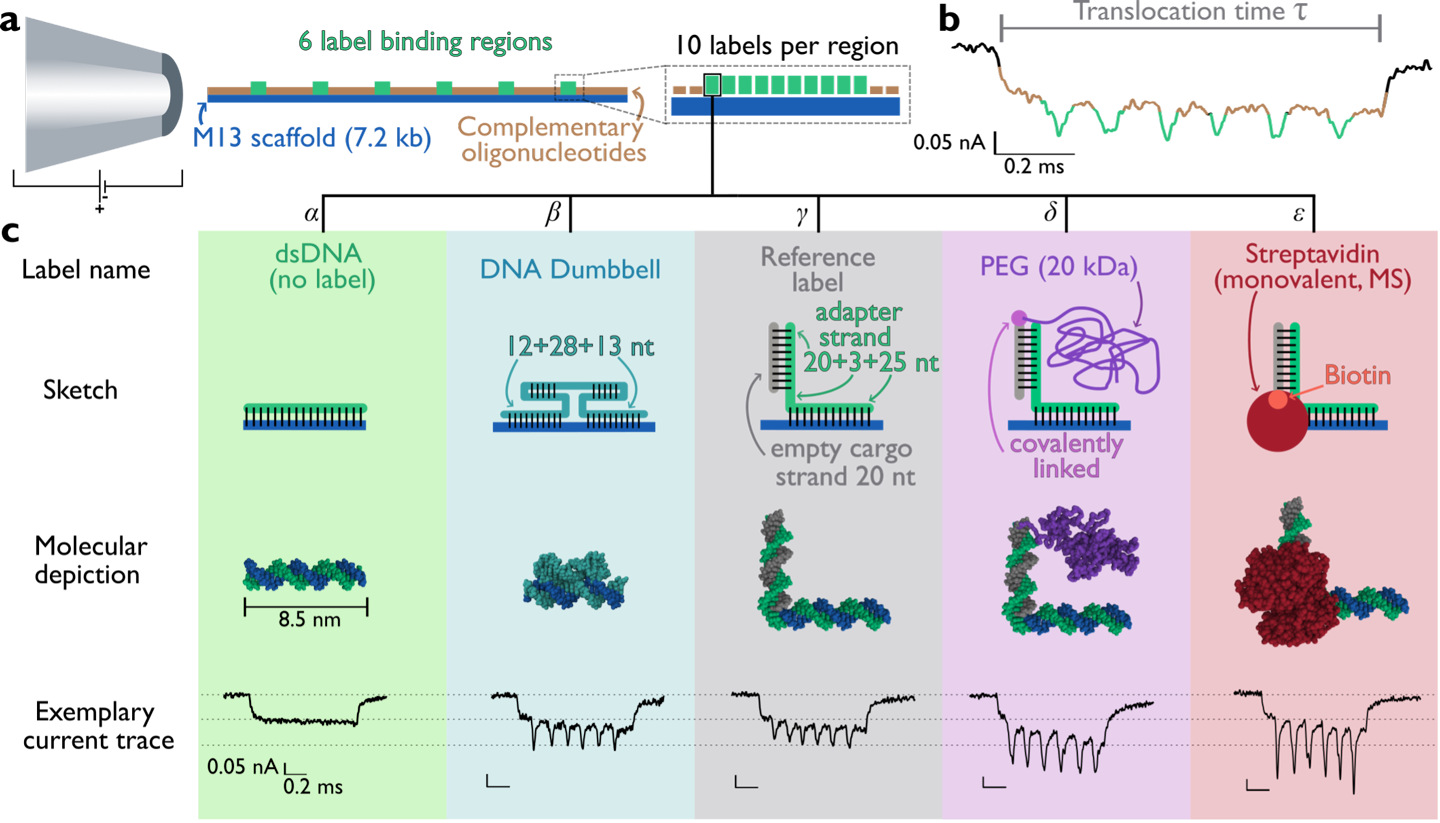
    • Gallery Image: Sketch of a dsDNA carrier labeled with 60 labels across binding regions translocating into a conical nanopore, where labels induce secondary current spikes., Image Caption: (a) Sketch of dsDNA carrier labelled with 60 labels, 10 per binding region, translocating into a conical nanopore. (b) Representative current trace of reference label carrier. The translocation time corresponds to the time the molecule spends in the sensing region, creating a detectable current drop. When passing the sensing region, the labels induce a secondary current spike (green) on top of the drop induced by the dsDNA itself (brown). (c) Overview of labels and their properties.
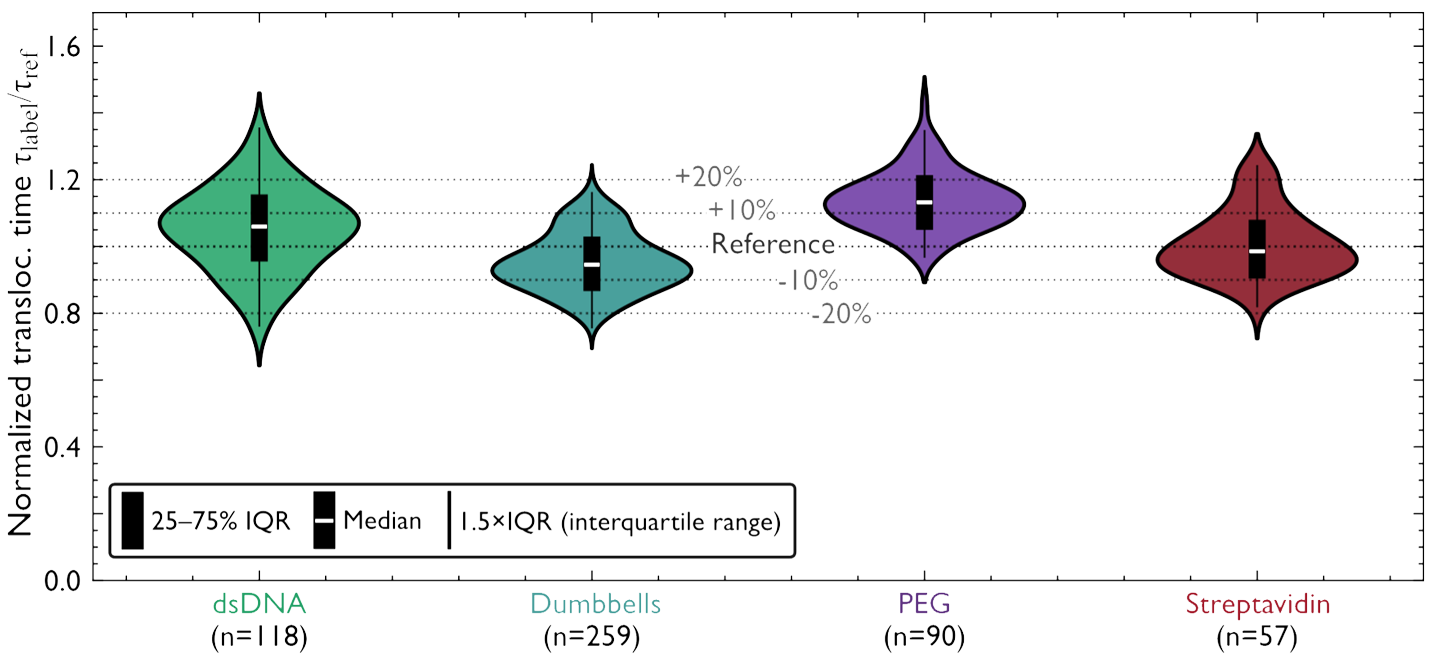
    • Gallery Image: , Image Caption: Relative changes in total translocation time τ compared to the reference label carrier.
  • Hits: 67

Project 8

  • Project Topic Subtitle: Aptamer sensing of proteins using optical microscopy and nanopores for single-molecule protein analysis
  • ESR Student Name: Archana Sivaraman
  • Selected Outputs / References:

    Aptamers are short strands of DNA or RNA that can bind specifically to a target molecule, such as a protein, small molecule, or even a whole cell. The most widely used method to discover aptamers is SELEX, which stands for Systematic Evolution of Ligands by EXponential enrichment. SELEX is an iterative selection process that mimics natural evolution in the laboratory to identify sequences with high binding affinity and specificity. The SELEX process begins with a very large library of random nucleic acid sequences often containing up to 10¹³–10¹⁵ unique molecules. This library is exposed to a target of interest (for example, a protein). A small fraction of sequences in the library will bind to the target, while the majority will not. The bound sequences are then separated from the unbound ones, typically through washing steps. The selected sequences are amplified using PCR (for DNA) or reverse transcription followed by PCR (for RNA), generating a new enriched pool. This cycle of binding, separation, and amplification is repeated multiple times (usually 8–15 rounds), gradually enriching the pool for high-affinity binders. Finally, the enriched sequences are identified using sequencing. Over the years, several variations of SELEX have been developed to improve specificity and applicability. These include cell-SELEX (targeting whole cells), in vivo SELEX, and toggle SELEX (for cross-reactivity across related targets). Advances in next-generation sequencing have also enabled deeper analysis of sequence enrichment across rounds, providing insights into selection dynamics.

    Despite its widespread use, SELEX has several important limitations. First, it is a time-consuming and labor-intensive process, often requiring weeks to months to complete. Second, the iterative amplification steps can introduce biases, favoring sequences that amplify efficiently rather than those that bind best. Third, SELEX primarily selects for affinity (how strongly something binds) but provides limited information about kinetics (how fast binding and unbinding occur), which are equally important for many applications. Additionally, the selection is typically performed under specific conditions that may not reflect real biological environments, leading to aptamers that perform poorly outside the selection setup. Another major challenge is that SELEX does not directly provide structural or mechanistic insight into why a particular aptamer binds well. It identifies “winners,” but not necessarily the underlying rules that govern binding. This limits our ability to rationally design better aptamers.

    Before the development of high-throughput single-molecule techniques, several alternative methods were used alongside or after SELEX to characterize aptamer binding. Techniques such as surface plasmon resonance (SPR) and isothermal titration calorimetry (ITC) provided measurements of binding affinity and thermodynamics. Fluorescence-based assays, including FRET and fluorescence anisotropy, enabled studies of binding interactions and conformational changes. Fluorescence correlation spectroscopy (FCS) allowed analysis of molecular interactions in solution. However, these methods are generally low-throughput and require testing one sequence at a time, making it impractical to explore large sequence spaces comprehensively. As a result, while SELEX is highly effective at discovering aptamers, it offers limited scalability in understanding sequence-function relationships. This gap has driven the development of newer approaches that combine high-throughput screening with detailed kinetic and mechanistic insight.

    SPARXS: A State-of-the-Art Technique for High-Throughput Aptamer Screening

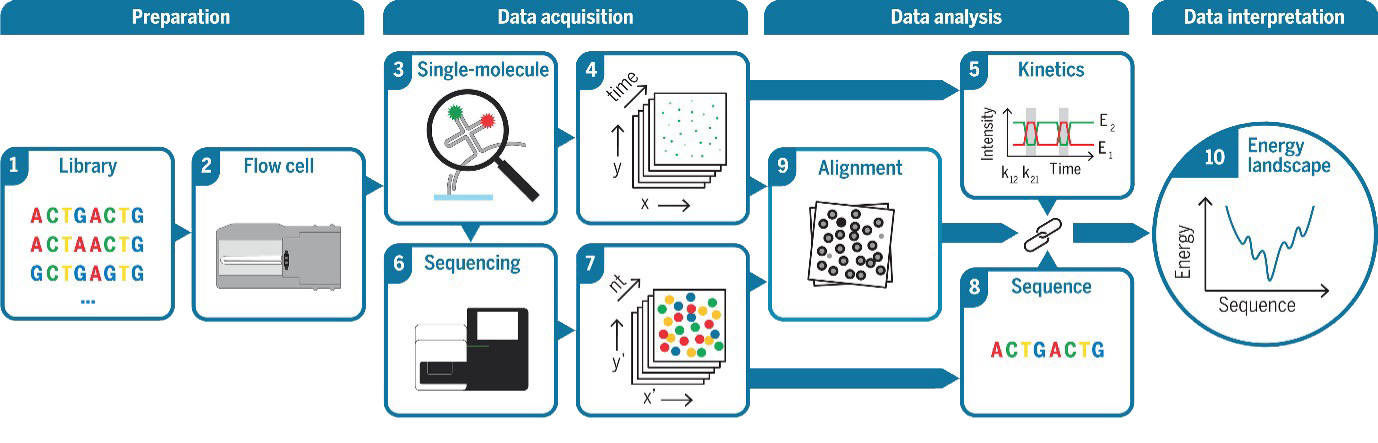
    SPARXS (Single-molecule Parallel Analysis for Rapid eXploration of Sequence space) represents a new generation of technologies designed to overcome the limitations of traditional aptamer discovery and characterization methods. It combines the strengths of single-molecule fluorescence microscopy with next-generation sequencing to enable simultaneous analysis of hundreds to thousands of sequences in a single experiment. The key innovation of SPARXS lies in its ability to link sequence identity with real-time molecular behavior at the single-molecule level. In this approach, a library of nucleic acid sequences (such as aptamers) is immobilized on a sequencing chip, typically an Illumina flow cell. Each molecule is spatially separated and can be observed individually using total internal reflection fluorescence (TIRF) microscopy. This allows researchers to record fluorescence time traces that capture binding and unbinding events in real time. After the imaging step, the same molecules are sequenced using standard next-generation sequencing workflows. Because the spatial position

  • Project Diagrams:
  • Hits: 12

Project 7

  • Project Topic Subtitle: Plasmon-enhanced spectroscopy at nanopores
  • ESR Student Name: Shrobona Banerjee
  • Selected Outputs / References:

    Plasmonic nanostructures have shown great potential for use in biosensing and single-molecule detection owing to their optical properties[cite: 136]. Their localized surface plasmon resonances (LSPR) provide many advantages in analytical spectroscopic techniques[cite: 137]. In surface enhanced Raman scattering (SERS), the Raman scattering signal of a molecule can be enhanced by several orders of magnitude due to high electromagnetic field enhancements as a consequence of the LSPR[cite: 137]. Very early work in SERS focused on electrochemical systems and simple analytes, while later studies identified the potential of plasmonic nanoparticles, particularly gold nanoparticles, as efficient SERS substrates for large molecules in biosensing applications[cite: 137]. SERS spectra of proteins, amino acids, nucleic acids and nucleic bases, and live cells have been reported using spherical gold nanoparticles[cite: 138]. Anisotropic nanostructures such as nanorods and nanostars have also been used to create different types hot-spots that provide very high field enhancements[cite: 139]. More complex nanostructures like shell-isolated nanoparticles, DNA-hybridized nanostructures, immobilized nanoparticle substrates and nanoshell arrays have been reported to show high stability of substrate-analyte interactions and thereby selectivity for probing different modes in the vibrational SERS spectra[cite: 139].

    The detection of single DNA and protein molecules by SERS dates back for several decades, and includes the detection of single hemoglobin molecules, DNA bases, and amino acids[cite: 140]. The field of molecular plasmonics, specifically the improved control of molecule-nanostructure interactions by positioning biomacromolecules in high local fields of plasmonic nanostructures, e.g., by the use of DNA origami technology, helped to improve the high sensitivity for detection of specific functional groups by SERS[cite: 140].

    Plasmonic nanopores emerged as plasmonic substrates that confine the biomolecule-metal nanostructure interaction when the biomolecules translocate through them[cite: 141]. Nanopore-based approaches were shown to be effective in distinguishing single molecule DNA bases and single amino acids in DNA and protein molecules, respectively[cite: 142]. However, the high fluctuation of SERS signals at high enhancement levels poses great challenges with respect to fully exploiting the vibrational information that is contained in the SERS data about specific molecular structure and interaction[cite: 143]. As example, the concentration-dependent interactions of a protein with a gold nanostructure were shown to greatly depend on the concentration and sequence of a protein, even at high sequence similarity[cite: 144].

    As such, trapping of biomolecules in SERS hot spots while translocating them through plasmonic nanopores is an effective strategy to isolate a biomolecule of interest for SERS characterization[cite: 145]. This project focuses on the following main aspects to improve in this approach by implementing[cite: 145]:

    An efficient temporal control of biomolecule translocation [cite: 146]
    The design of optimized plasmonic and identification of excitation conditions that yield an actual vibrational structural characterization based on more than a few bands attained previously [cite: 147]
    The interpretation of intrinsic variations that are present in any SERS spectra, to identify spectral fingerprints of different structures of biomolecule analytes, such as protein secondary structure[cite: 148].

    References
    1. Mitsui, K.; Handa, Y.; Kajikawa, K. Optical fiber affinity biosensor based on localized surface plasmon resonance. Applied Physics Letters 2004, 85 (18), 4231-4233. DOI: 10.1063/1.1812583 (acccessed 5/12/2026). [cite: 150, 151]
    2. Moskovits, M. Surface-enhanced spectroscopy. Reviews of Modern Physics 1985, 57 (3), 783-826. DOI: 10.1103/RevModPhys.57.783. [cite: 152]
    3. Kneipp, K.; Kneipp, H.; Kartha, V. B.; Manoharan, R.; Deinum, G.; Itzkan, I.; Dasari, R. R.; Feld, M. S. Detection and identification of a single DNA base molecule using surface-enhanced Raman scattering (SERS). Physical Review E 1998, 57 (6), R6281-R6284. DOI: 10.1103/PhysRevE.57.R6281. [cite: 153, 154, 155]
    4. Fleischmann, M.; Hendra, P. J.; McQuillan, A. J. Raman spectra of pyridine adsorbed at a silver electrode. Chemical Physics Letters 1974, 26 (2), 163-166. DOI: 10.1016/0009-2614(74)85388-1. [cite: 156, 157]
    5. Raschke, G.; Kowarik, S.; Franzl, T.; Sönnichsen, C.; Klar, T. A.; Feldmann, J.; Nichtl, A.; Kürzinger, K. Biomolecular Recognition Based on Single Gold Nanoparticle Light Scattering. Nano Letters 2003, 3 (7), 935-938. DOI: 10.1021/nl034223+. [cite: 158, 159, 160]
    6. Szekeres, G. P.; Kneipp, J. Different binding sites of serum albumins in the protein corona of gold nanoparticles. Analyst 2018, 143 (24), 6061-6068. DOI: 10.1039/c8an01321g From NLM Medline. [cite: 161, 162]
    7. Szekeres, G. P.; Kneipp, J. SERS Probing of Proteins in Gold Nanoparticle Agglomerates. Front Chem 2019, 7, 30. DOI: 10.3389/fchem.2019.00030 From NLM PubMed-not-MEDLINE. [cite: 163, 164]
    8. Xu, H.; Bjerneld, E. J.; Käll, M.; Börjesson, L. Spectroscopy of Single Hemoglobin Molecules by Surface Enhanced Raman Scattering. Physical Review Letters 1999, 83 (21), 4357-4360. DOI: 10.1103/PhysRevLett.83.4357. [cite: 165, 166]
    9. Podstawka, E.; Ozaki, Y.; Proniewicz, L. M. Part III: Surface-Enhanced Raman Scattering of Amino Acids and Their Homodipeptide Monolayers Deposited onto Colloidal Gold Surface. Applied Spectroscopy 2005, 59 (12), 1516-1526. DOI: 10.1366/000370205775142520 (acccessed 2024/06/11). [cite: 167, 168]
    10. Peticolas, W. L. Raman spectroscopy of DNA and proteins. In Methods in Enzymology, Vol. 246; Academic Press, 1995; pp 389-416. [cite: 169, 170]
    11. Živanović, V.; Milewska, A.; Leosson, K.; Kneipp, J. Molecular Structure and Interactions of Lipids in the Outer Membrane of Living Cells Based on Surface-Enhanced Raman Scattering and Liposome Models. Analytical Chemistry 2021, 93 (29), 10106-10113. DOI: 10.1021/acs.analchem.1c00964. [cite: 171, 172]
    12. Spedalieri, C.; Szekeres, G. P.; Werner, S.; Guttmann, P.; Kneipp, J. Intracellular optical probing with gold nanostars. Nanoscale 2021, 13 (2), 968-979, 10.1039/D0NR07031A. DOI: 10.1039/D0NR07031A. [cite: 173, 174]
    13. Fazio, B.; D’Andrea, C.; Foti, A.; Messina, E.; Irrera, A.; Donato, M. G.; Villari, V.; Micali, N.; Maragò, O. M.; Gucciardi, P. G. SERS detection of Biomolecules at Physiological pH via aggregation of Gold Nanorods mediated by Optical Forces and Plasmonic Heating. Scientific Reports 2016, 6 (1), 26952. DOI: 10.1038/srep26952. [cite: 175, 176, 177]
    14. Heck, C.; Prinz, J.; Dathe, A.; Merk, V.; Stranik, O.; Fritzsche, W.; Kneipp, J.; Bald, I. Gold Nanolenses Self-Assembled by DNA Origami. ACS Photonics 2017, 4 (5), 1123-1130. DOI: 10.1021/acsphotonics.6b00946. [cite: 178, 179]
    15. Cheng, H.-W.; Huan, S.-Y.; Wu, H.-L.; Shen, G.-L.; Yu, R.-Q. Surface-Enhanced Raman Spectroscopic Detection of a Bacteria Biomarker Using Gold Nanoparticle Immobilized Substrates. Analytical Chemistry 2009, 81 (24), 9902-9912. DOI: 10.1021/ac9014275. [cite: 180, 181, 182]
    16. Wang, H.; Kundu, J.; Halas, N. J. Plasmonic Nanoshell Arrays Combine Surface-Enhanced Vibrational Spectroscopies on a Single Substrate. Angewandte Chemie International Edition 2007, 46 (47), 9040-9044. DOI: 10.1002/anie.200702072 (acccessed 2026/05/12). [cite: 183, 184]
    17. Brulé, T.; Yockell-Lelièvre, H.; Bouhélier, A.; Margueritat, J.; Markey, L.; Leray, A.; Dereux, A.; Finot, E. Sorting of Enhanced Reference Raman Spectra of a Single Amino Acid Molecule. The Journal of Physical Chemistry C 2014, 118 (31), 17975-17982. DOI: 10.1021/jp504395c. [cite: 185, 186, 187]
    18. Tapio, K.; Mostafa, A.; Kanehira, Y.; Suma, A.; Dutta, A.; Bald, I. A Versatile DNA Origami-Based Plasmonic Nanoantenna for Label-Free Single-Molecule Surface-Enhanced Raman Spectroscopy. ACS Nano 2021, 15 (4), 7065-7077. DOI: 10.1021/acsnano.1c00188. [cite: 188, 189, 190]
    19. Heck, C.; Kanehira, Y.; Kneipp, J.; Bald, I. Placement of Single Proteins within the SERS Hot Spots of Self-Assembled Silver Nanolenses. Angewandte Chemie International Edition 2018, 57 (25), 7444-7447. DOI: 10.1002/anie.201801748 (acccessed 2026/05/15). [cite: 191, 192]
    20. Huang, J.-A.; Mousavi, M. Z.; Zhao, Y覆, Hubarevich, A.; Omeis, F.; Giovannini, G.; Schütte, M.; Garoli, D.; De Angelis, F. SERS discrimination of single DNA bases in single oligonucleotides by electro-plasmonic trapping. Nature Communications 2019, 10 (1), 5321. DOI: 10.1038/s41467-019-13242-x. [cite: 193, 194, 195]
    21. Huang, J.-A.; Mousavi, M. Z.; Giovannini, G.; Zhao, Y.; Hubarevich, A.; Soler, M. A.; Rocchia, W.; Garoli, D.; De Angelis, F. Multiplexed Discrimination of Single Amino Acid Residues in Polypeptides in a Single SERS Hot Spot. Angewandte Chemie International Edition 2020, 59 (28), 11423-11431. DOI: 10.1002/anie.202000489 (acccessed 2026/05/12). [cite: 196, 197, 198]
    22. Lindquist, N. C.; de Albuquerque, C. D. L.; Sobral-Filho, R. G.; Paci, I.; Brolo, A. G. High-speed imaging of surface-enhanced Raman scattering fluctuations from individual nanoparticles. Nature Nanotechnology 2019, 14 (10), 981-987. DOI: 10.1038/s41565-019-0535-6. [cite: 199, 200, 201]
    23. Crick, C. R.; Albella, P.; Kim, H.-J.; Ivanov, A. P.; Kim, K.-B.; Maier, S. A.; Edel, J. B. Low-Noise Plasmonic Nanopore Biosensors for Single Molecule Detection at Elevated Temperatures. ACS Photonics 2017, 4 (11), 2835-2842. DOI: 10.1021/acsphotonics.7b00825. [cite: 202, 203, 204]
    24. Di Fiori, N.; Squires, A.; Bar, D.; Gilboa, T.; Moustakas, T. D.; Meller, A. Optoelectronic control of surface charge and translocation dynamics in solid-state nanopores. Nature Nanotechnology 2013, 8 (12), 946-951. DOI: 10.1038/nnano.2013.221. [cite: 205, 206, 207]
    25. Brulé, T.; Bouhelier, A.; Dereux, A.; Finot, E. Discrimination between Single Protein Conformations Using Dynamic SERS. ACS Sensors 2016, 1 (6), 676-680. DOI: 10.1021/acssensors.6b00097. [cite: 208, 209]
  • Hits: 3