General position of the field
Before the start of DYNAMO, solid-state nanopores were already established as a powerful platform for single-molecule biophysics and biomolecular sensing. In the basic experiment, a nanometre-scale pore separates two electrolyte reservoirs. A voltage drives ions through the pore and also drives charged biomolecules such as DNA or RNA through the sensing region. Each translocation produces a short change in ionic current, from which information about molecular size, conformation and transport dynamics can be extracted.
Remaining limitation
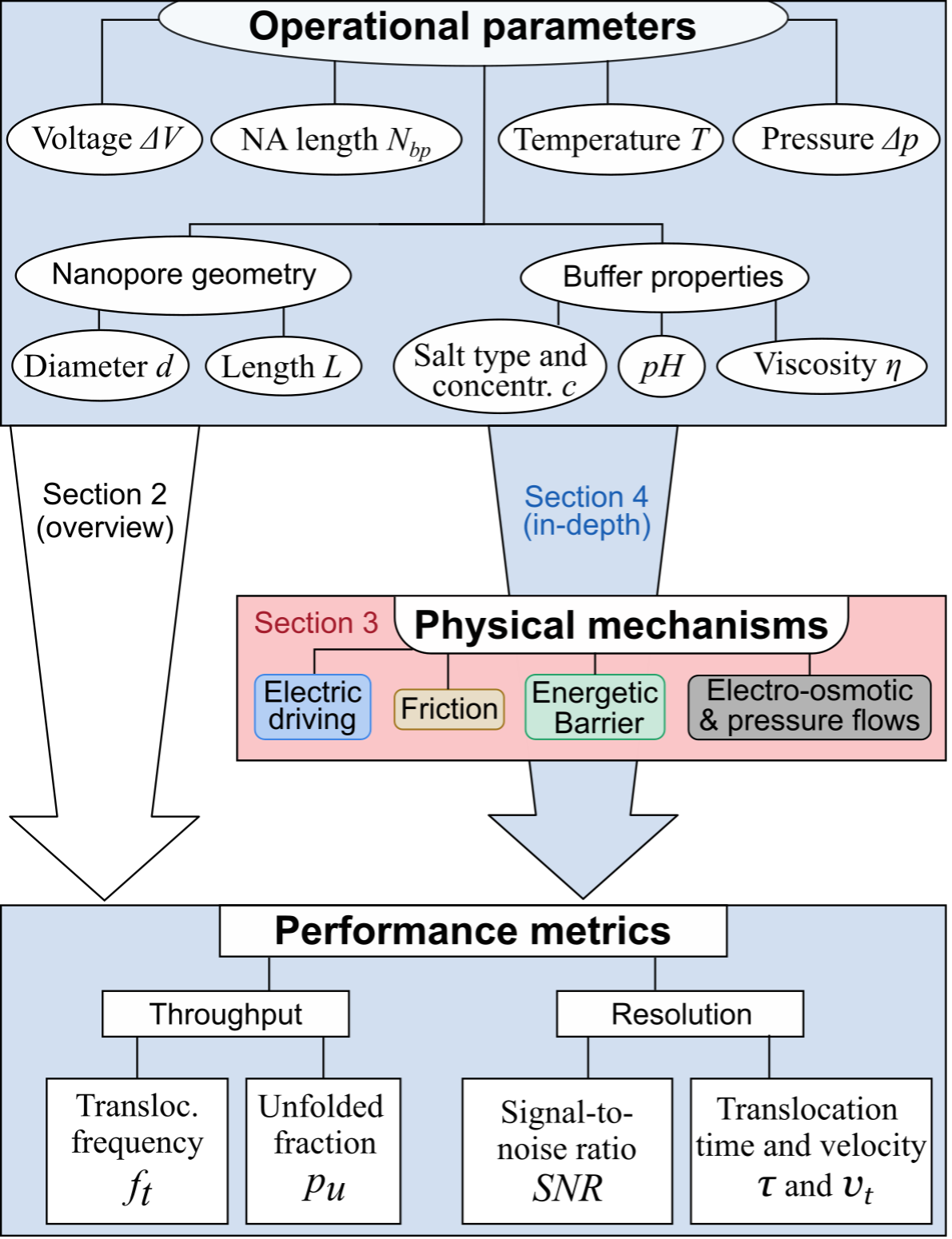
However, the field had not yet solved the problem of reliable high-resolution molecular identification. Straightforward ionic-current readout is very sensitive to molecular velocity, signal-to-noise ratio, pore geometry and event-to-event variability. This is especially problematic for short DNA and RNA molecules, modified bases or single-base differences, because the available information must be collected during a very short residence time in the nanopore. A central challenge was therefore not only how to detect that a molecule had passed through a nanopore, but how to control and interpret the molecular motion well enough to identify chemical or structural features.
Motivation for electro-optical approaches
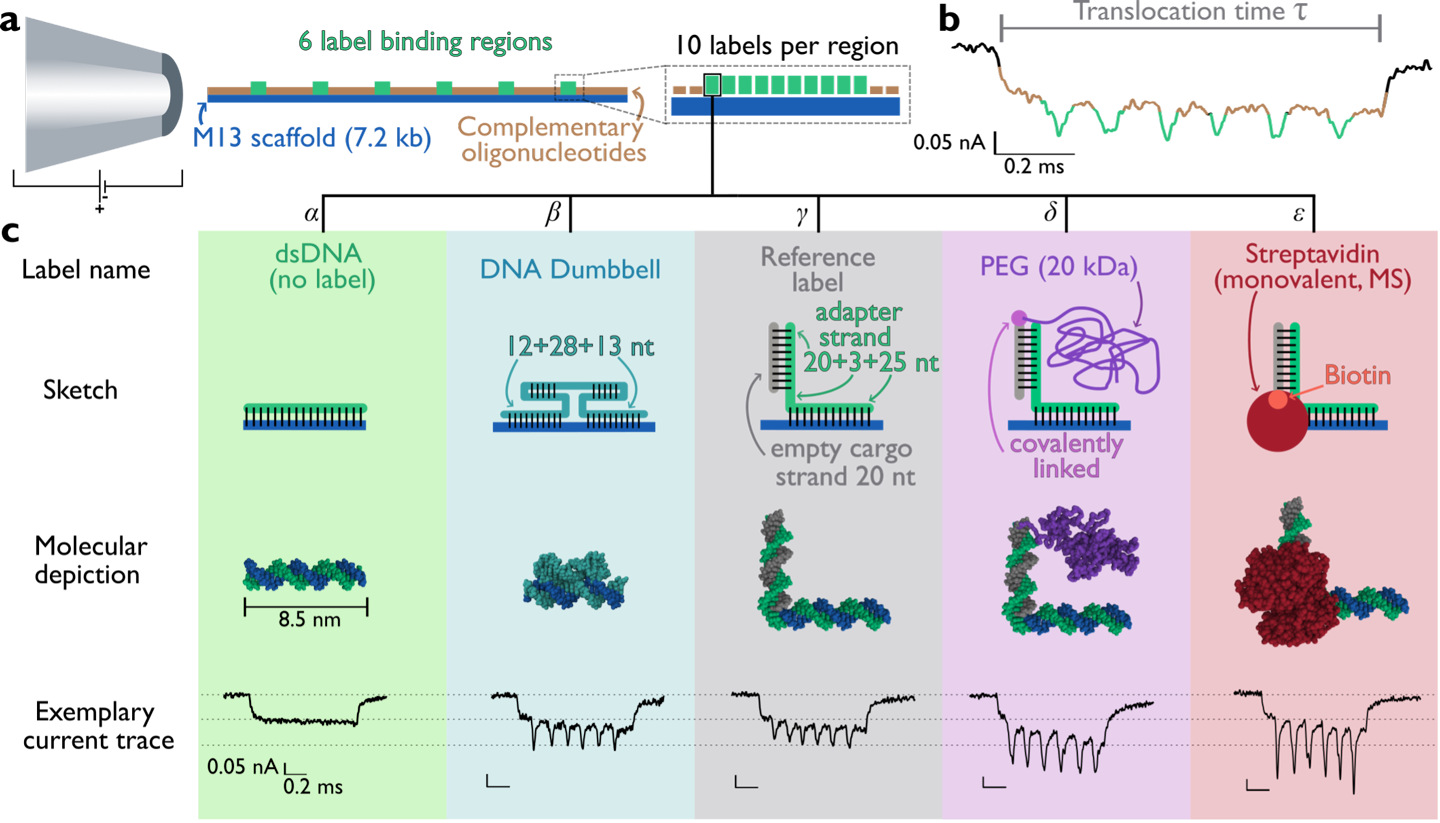
Electro-optical nanopores, including approaches based on fluorescence, FRET, plasmonic enhancement and SERS, were proposed as routes to add molecular specificity beyond standard ionic-current detection. In principle, optical readout could provide chemical or structural fingerprints while the nanopore localises the molecule and provides electrical detection. Yet this strategy still depends critically on translocation dynamics: the molecule must remain in or near the sensing volume for long enough, with sufficiently reproducible orientation and position, for an interpretable optical or electrical signature to be recorded.
State-of-the-art gap
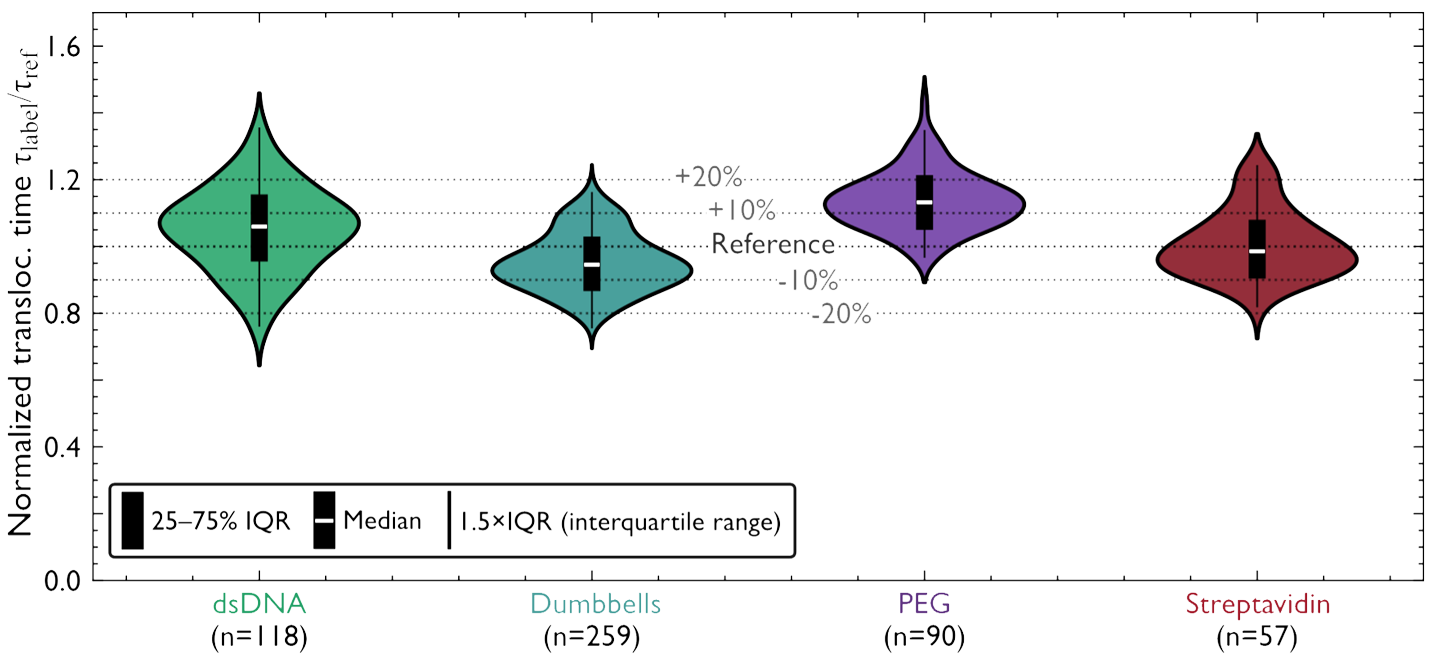
Thus, at the start of DYNAMO, the field had strong proof-of-principle results for single-molecule nanopore detection, but lacked a complete mechanistic understanding of the transport process under realistic experimental conditions. Key unresolved questions included the roles of hydrodynamic drag, electro-osmotic flow, ion-specific effects, local molecular structure, labels, pore geometry and surface interactions. Addressing these questions was essential for translating nanopore detection into robust molecular readout.